What are the four pillars of digital strategy?
TL;DR
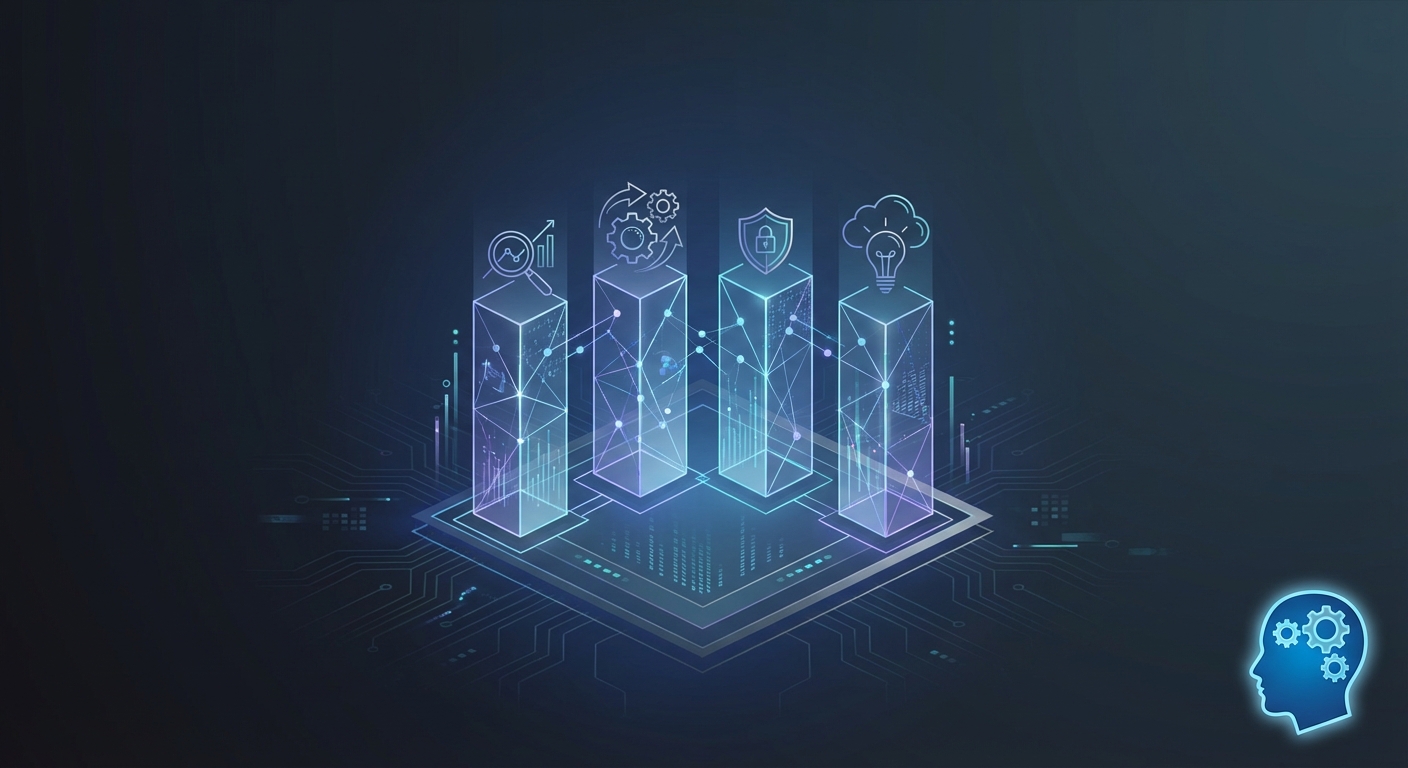
- This article covers the essential framework for digital transformation by breaking down the four core pillars: Customer Experience, Operational Processes, Business Models, and Digital Culture. You will learn how to align brand identity with tech stacks and why most enterprise strategies fail without a human-centric approach. We exploring how these pillars support long-term ROI and brand consistency in a crowded B2B market.
The Foundation of Modern Digital Strategy
Ever feel like your company is just "doing digital" by throwing money at a new website or a flashy social campaign? Honestly, it's a trap many of us fall into, but true digital strategy isn't just about the tech—it's about how every part of the business actually talks to each other.
Most b2b companies struggle because they keep things in silos. The marketing team does one thing, while the folks in ops are using systems from 2010. (Data Centers in Virginia - JLARC) Moving toward a holistic change means your brand voice doesn't just look good on Instagram; it stays consistent when a customer calls support or uses your app.
- Breaking the silos: In industries like healthcare, a patient's digital experience shouldn't feel different between the booking portal and the actual clinic visit.
- Consistency is king: A framework ensures your brand doesn't feel like a "split personality" across different regions or departments.
- Better ROI: When you stop doing random acts of digital, you actually start seeing where the money goes.
To get the ceo to actually listen, we have to talk about more than just "vibes." We’re looking at four main areas: Experience, Operations, Business Model Innovation, and Culture. According to a 2023 report by Deloitte, companies with a high "digital maturity" are much more likely to report significantly higher net profit margins than their peers. It's about how the whole engine runs.

If you’re in retail, this might look like using an api to sync your warehouse with your web store so you never sell a "ghost" item. For the non-tech folks, think of an api as the "connective tissue" of your company—it’s the stuff that allows different business functions to share data automatically without a human having to copy-paste everything. It’s messy at first, but it's the only way to survive.
Next, let's dive into the first big one: why the customer experience is usually where everything starts (and sometimes ends).
Pillar 1: Customer Experience and Brand Identity
Ever tried to buy something on a mobile site and the "checkout" button just... disappeared? Honestly, there is nothing that kills a brand faster than a digital experience that feels like it was designed in a dark room by someone who hates people.
We talk a lot about ui and ux—but for a cmo, this isn't just about pretty colors. It’s about how your brand makes someone feel when they’re stressed out at 2 am trying to solve a problem. A 2023 study by PwC found that 32% of customers will walk away from a brand they love after just one bad experience. One! That is a tiny margin for error.
- Mobile isn't a "version": If your strategy treats mobile as a shrunken-down desktop site, you've already lost. Google’s mobile-first indexing means your seo and your brand perception are basically the same thing now. (Mobile-first Indexing Best Practices | Google Search Central)
- Micro-interactions matter: In banking, a simple animation that shows a check is "scanning" reduces anxiety. In retail, it's about the thumb-friendly navigation.
- Bridging the gap: This is where groups like GetDigitize come in—they help take those high-level brand stories and actually bake them into the technical ux so it doesn't feel robotic.
Your brand identity needs to be a thread, not a series of patches. If your LinkedIn looks like a premium law firm but your app feels like a chaotic flea market, users get "brand whiplash."
"Consistency is the bedrock of trust in digital environments; without it, the marketing funnel just leaks."
Mapping your funnel to touchpoints means knowing that a b2b buyer might check your api docs before they ever talk to sales. If those docs are a mess, your "premium" brand positioning is toast. It’s about making sure the "vibe" stays the same from the first ad to the final invoice.
Next up, we’re looking at how to make the backend actually move as fast as your marketing claims.
Pillar 2: Operational Process Optimization
Ever feel like your team is just "burning "hours on stuff that doesn't actually matter? Honestly, if your marketing ops feels like a game of whack-a-mole, you're probably ignoring Pillar 2: making the backend actually work.
I've seen brand managers spend half their week manually updating spreadsheets or copy-pasting data between systems. It’s a total vibe killer. When you get automation implementation right, you aren't just "saving time"—you're giving your smartest people their brains back. While these examples often sound like retail or banking, these operational efficiencies apply across both b2b and b2c sectors because everyone hates manual data entry.
- Martech that actually talks: Stop letting your email tool and your crm live in different worlds. A 2024 report by Gartner shows that marketing teams only use about 33% of their tech stack's actual capabilities. That's a lot of wasted money.
- Legacy systems aren't an excuse: You don't always have to rip everything out. Sometimes, just building a simple api bridge—that connective tissue again—can make that 20-year-old database feel brand new.
- Measuring what matters: Use automation to track marketing roi in real-time. If you can't see which campaign is paying the bills by lunch, your process is broken.

In healthcare, this might look like automating patient reminders so staff can actually focus on care. In finance, it’s about digitizing the "paper trail" so audits don't take six months.
Next, we gotta talk about how to stop just "reacting" and start actually building new stuff.
Pillar 3: Business Model Innovation
So, you’ve fixed the website and automated the boring stuff, but are you actually selling the same way you did in 1998? If your revenue still comes from the exact same place it did ten years ago, you're basically just a faster version of a dinosaur.
Pillar 3 is about Business Model Innovation. It’s where we stop using tech to just "support" the business and start using it to be the business. Honestly, I've seen too many cmo types get scared here because it feels like changing the tires while the car is doing 80 on the highway. But staying the same is riskier.
Look at how some industries are completely shifting their dna. It isn't just about selling a product anymore; it's about the ecosystem around it.
- Service to Product-Led: Instead of selling one-off consulting, firms are building proprietary ai tools that clients subscribe to. It turns lumpy revenue into a steady stream.
- Data as the Asset: In agriculture, companies aren't just selling tractors; they’re selling data-driven "yield-as-a-service" using sensors and predictive analytics.
- The "As-A-Service" pivot: Even in heavy manufacturing, we're seeing a shift toward usage-based billing. You don't buy the engine; you buy the "uptime."
A 2023 report by McKinsey & Company notes that companies who prioritize business model innovation alongside digital tech see significantly higher returns than those who just focus on efficiency. It's about finding those "new pockets" of value.

When you're building a digital-first product strategy, you gotta think about the api first. If your new digital offering can't talk to other tools, it's dead on arrival. I've seen b2b brands fail because they built a "closed garden" that nobody wanted to enter.
Ethically, this gets tricky. When you move to data-driven models, you have to be super transparent about how you're using customer info. Don't be that company that hides the "data sharing" clause in 50 pages of legalese—it'll torch your brand trust in a heartbeat.
Even the most innovative business model will fail if the internal culture isn't equipped to support it.
Pillar 4: Digital Culture and Change Management
You can buy all the fancy tech in the world, but if your team hates using it, you just bought a very expensive paperweight. Honestly, the human side of digital strategy is where most projects go to die because we forget that people are creatures of habit.
I’ve seen great tools get ignored because the workflow felt like a chore. If the folks on the ground don't see how a new api makes their life easier, they'll just find a workaround.
- Fear of the unknown: Most resistance isn't about laziness; it’s about people worrying they can't keep up with ai or new automation.
- Upskilling is a must: You can't expect a marketing team from 2015 to suddenly master programmatic ads without real training.
- Top-down isn't enough: The ceo needs to use the tools too, or it just feels like "do as I say, not as I do."
A 2023 report by Prosci shows that projects with excellent change management are six times more likely to meet objectives than those without it. That's a massive gap.
Where to Start?
In the end, digital strategy isn't a "one and done" thing. It’s a living loop of experience, ops, innovation, and people. But where do you actually start?
Most companies try to do everything at once and fail. I usually suggest starting with a Digital Maturity Audit across all four pillars. Look at Pillar 2 (Operations) first—if your backend is a mess, you can't innovate or provide a good experience. Once the pipes are clean, move to Pillar 1 to fix how you look to the world. Innovation and Culture then follow in a continuous cycle. If you keep those four pillars balanced, you're not just surviving the digital shift—you're actually leading it. Good luck out there.